Por: Julio Cesar Sandria Reynoso
Maestro en Inteligencia Artificial
15 de Octubre de 2026
¿Puede una computadora antigua convertirse en un servidor de inteligencia artificial? Evaluamos 22 modelos con Ollama.
Una experiencia del Instituto de Robótica de Xalapa (iRoX) para aprovechar computadoras existentes mediante inteligencia artificial local: Benchmark iRoX V0.8.7.
Introducción
La inteligencia artificial generativa suele asociarse con centros de datos y tarjetas gráficas de alto rendimiento. Sin embargo, también podemos aprovechar computadoras que han dejado de utilizarse y convertirlas en servidores locales de IA. En iRoX nos preguntamos qué tan útil puede ser una computadora antigua para ejecutar modelos de lenguaje con Ollama.
No buscamos competir con los grandes servicios comerciales, sino identificar modelos utilizables, comparar la calidad de sus respuestas y medir cuánto tardan en generarlas. El experimento terminó con 22 modelos evaluados, 220 respuestas históricas y dos candidatos recomendados para necesidades diferentes.
1. El origen del proyecto
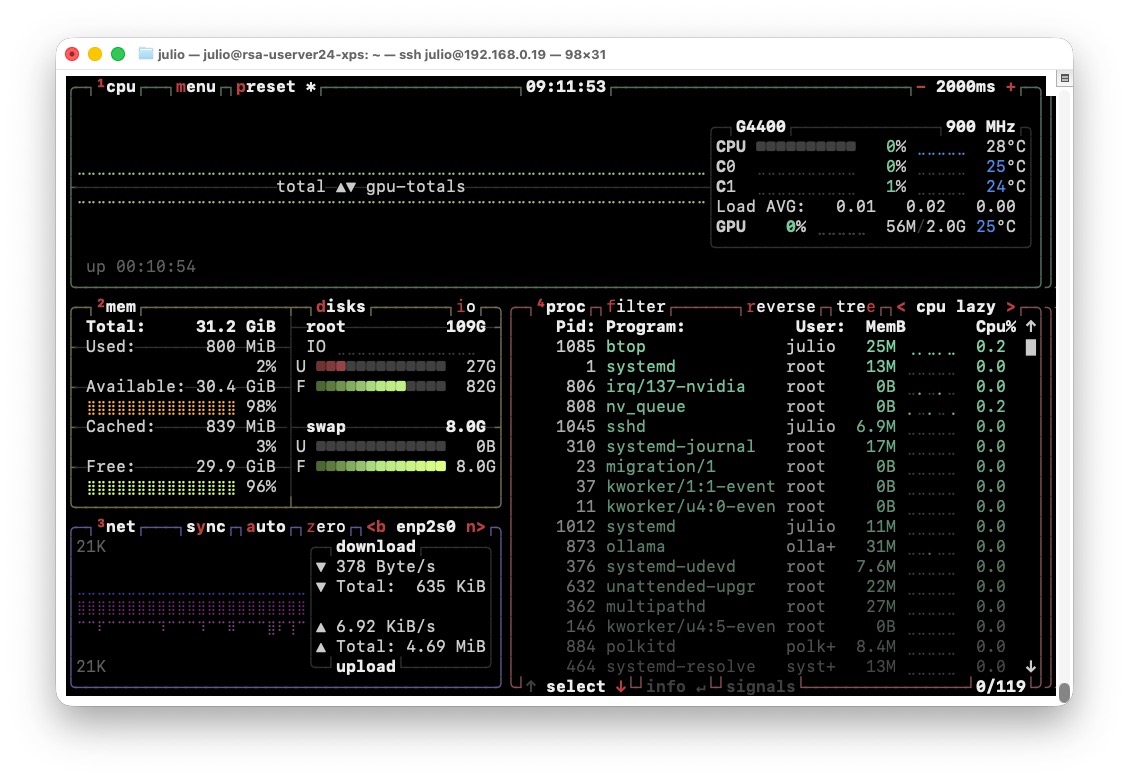
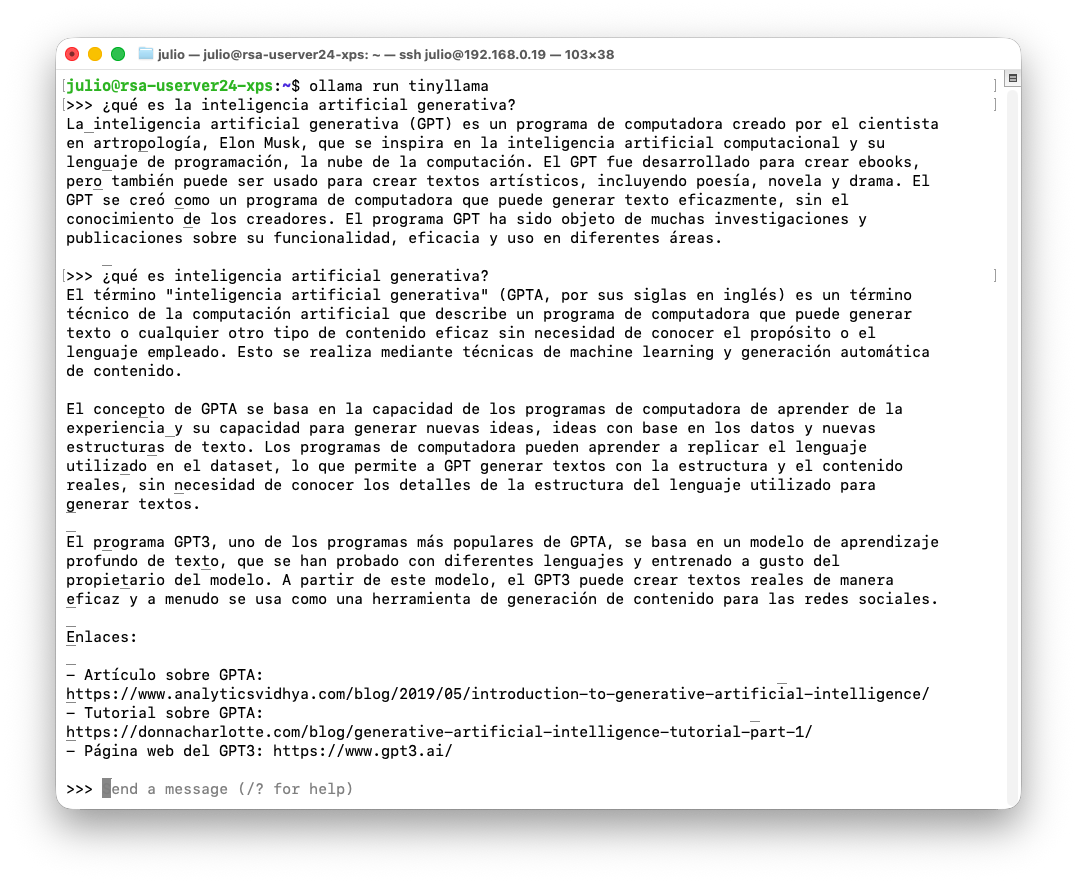
En septiembre de 2026 documentamos en Robótica Sandria la instalación de una IA generativa con Ubuntu y Ollama. El equipo tenía originalmente 8 GB de RAM y un disco duro mecánico (HDD, hard disk drive). Después ampliamos la memoria a 32 GB y actualizamos el almacenamiento a una unidad de estado sólido (SSD, solid state drive) para probar modelos mayores.
| Componente | Configuración durante el benchmark |
|---|---|
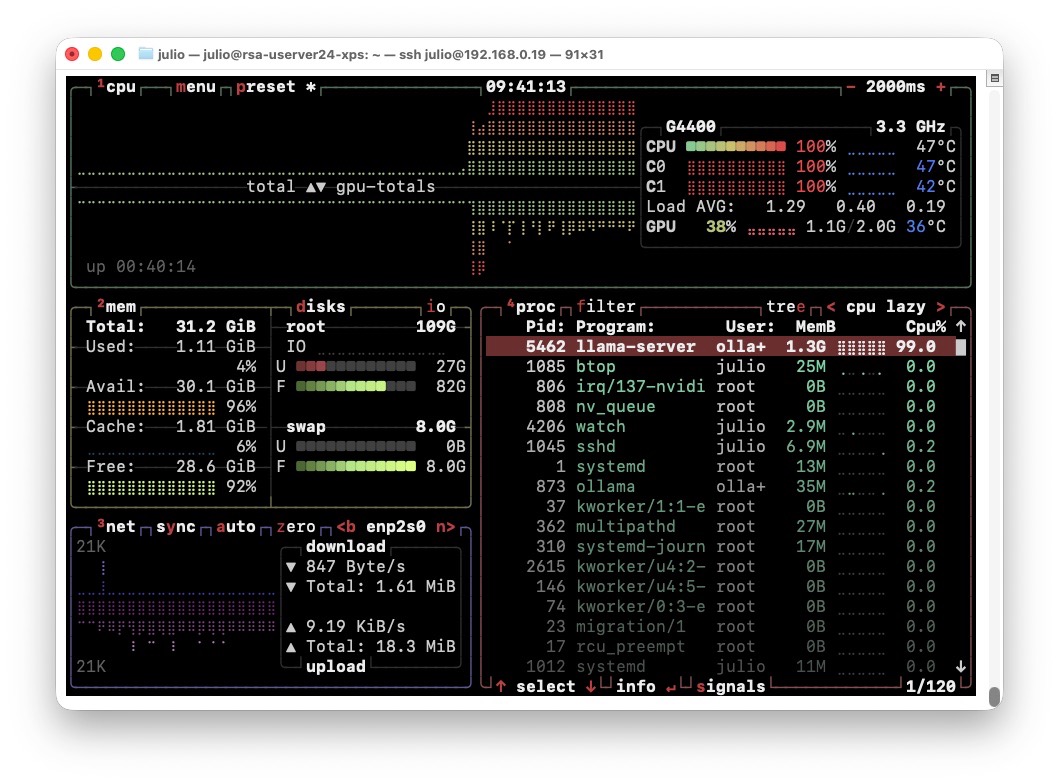
| Procesador | Intel Pentium G4400, 3.30 GHz |
| RAM | 32 GB (2 × 16 GB) |
| Almacenamiento principal | SSD de 120 GB |
| Tarjeta gráfica con GPU | NVIDIA GTX 750 Ti, 2 GB |
| Sistema operativo | Ubuntu Server 24.04 LTS |
| Motor | Ollama |
| Inferencia principal | CPU |
La GPU (Graphics Processing Unit o Unidad de Procesamiento Gráfico) no se utilizó como acelerador principal. Una pregunta todavía pendiente es si los 32 GB de RAM eran necesarios para los modelos finalmente elegidos o si una ampliación menor habría bastado.
2. ¿Qué medimos?
Un benchmark es un conjunto de pruebas ejecutadas bajo condiciones definidas. En este estudio consideramos calidad de respuesta, tiempo medio por prueba, capacidad de ejecución y fiabilidad. La prioridad fue comparar la calidad y el tiempo total de respuesta en un mismo servidor. Estos resultados son una evaluación operativa, no una validación científica general de los modelos.
3. Evolución del benchmark iRoX
El proyecto comenzó con un cliente Python para comunicarse con Ollama. Se añadieron registros de tiempo, respuestas y métricas; un banco de diez pruebas; ejecución por lotes; exportación CSV; conservación de respuestas; evaluación automática; y auditorías de discrepancias. Las versiones V0.6 consolidaron el banco de pruebas y las series V0.7 y V0.8 profundizaron en la revisión de calidad y trazabilidad. Este artículo utiliza los resultados consolidados V0.8.7.
4. El banco de diez pruebas
| ID | Área |
|---|---|
| MAT-001 | Matemáticas |
| MAT-002 | Matemáticas |
| LOG-001 | Lógica |
| LOG-002 | Lógica |
| PROG-001 | Programación |
| PROG-002 | Programación |
| ROB-001 | Robótica |
| IA-001 | Inteligencia artificial |
| DAT-001 | Análisis de datos |
| STEM-001 | Ciencia, tecnología e ingeniería |
Una actividad solicitaba analizar los tiempos 2, 3, 3, 4 y 8 segundos. La media correcta es 4 segundos y la mediana 3. También se evaluaron tareas de Python y situaciones de robótica, como el uso de sensores para seguir una línea. Cada uno de los 22 modelos recibió diez pruebas.
5. Los 22 modelos evaluados
La tabla muestra las puntuaciones consolidadas de iRoX V0.8.7, los tamaños registrados para los modelos y los tiempos medios por prueba. El tamaño del archivo del modelo no equivale a la RAM máxima consumida durante su ejecución.
| Posición | Modelo | Tamaño | Calidad /100 | Tiempo medio (s) |
|---|---|---|---|---|
| 1 | gemma3:4b | 3.11 GB | 98.33 | 166.39 |
| 2 | sam860/LFM2:700m | 754.91 MB | 93.33 | 31.74 |
| 3 | gemma2:2b | 1.52 GB | 93.33 | 40.75 |
| 4 | qwen2.5:1.5b | 940.38 MB | 88.33 | 29.10 |
| 5 | sam860/olmo2:1b-Q5_K_M | 1.00 GB | 86.67 | 40.79 |
| 6 | llama3.2:3b | 1.88 GB | 85.00 | 105.86 |
| 7 | llama3.2:latest | 1.88 GB | 85.00 | 116.40 |
| 8 | qwen2.5:3b | 1.80 GB | 80.00 | 108.50 |
| 9 | granite4:3b | 1.96 GB | 80.00 | 113.45 |
| 10 | llama3.2:1b | 1.23 GB | 71.67 | 36.81 |
| 11 | phi3:latest | 2.03 GB | 68.33 | 79.63 |
| 12 | jewelzufo/unsloth_granite-4.0-h-350m-GGUF:latest | 212.36 MB | 60.00 | 2.59 |
| 13 | qwen3:8b | 4.87 GB | 60.00 | 493.59 |
| 14 | llama2-uncensored:latest | 3.56 GB | 57.50 | 55.59 |
| 15 | tinyllama:latest | 608.16 MB | 45.00 | 30.04 |
| 16 | hf.co/CoreWorxLab/caal-qwen3.5-2b:latest | 1.19 GB | 40.00 | 59.25 |
| 17 | jewelzufo/MiniCPM5-1B:latest | 656.19 MB | 37.50 | 67.48 |
| 18 | smollm:1.7b-instruct-v0.2-q2_K | 643.34 MB | 22.50 | 90.49 |
| 19 | moondream:latest | 1.62 GB | 18.33 | 12.57 |
| 20 | smollm2:135m-instruct-q4_K_M | 100.58 MB | 15.00 | 20.74 |
| 21 | qwen3:4b | 2.33 GB | 10.00 | 256.45 |
| 22 | Alieno/ailo-152m-v3:latest | 155.63 MB | 5.00 | 0.76 |
Fuente: resultados históricos consolidados de iRoX Benchmark V0.8.7. Los tiempos no están normalizados por número de tokens. Una puntuación baja puede reflejar fallos de formato, truncamiento o incompatibilidad de la tarea con el modelo; no demuestra inutilidad general.
6. Selección de los cinco finalistas
Para el análisis final seleccionamos los cinco modelos con mejores resultados de calidad en nuestro banco de pruebas, considerando también sus tiempos y tamaños.
| Modelo | Tamaño del modelo | Calidad /100 | Tiempo medio (s) |
|---|---|---|---|
| gemma3:4b | 3.11 GB | 98.33 | 166.39 |
| sam860/LFM2:700m | 754.91 MB | 93.33 | 31.74 |
| gemma2:2b | 1.52 GB | 93.33 | 40.75 |
| qwen2.5:1.5b | 940.38 MB | 88.33 | 29.10 |
| sam860/olmo2:1b-Q5_K_M | 1.00 GB | 86.67 | 40.79 |
gemma3:4b obtuvo la puntuación más alta (98.33/100), con 166.39 segundos de promedio por prueba. sam860/LFM2:700malcanzó 93.33/100 y tardó 31.74 segundos en promedio: fue aproximadamente 5.24 veces más rápido en tiempo total por prueba. Esa razón no significa que genere tokens 5.24 veces más rápido, porque la longitud de las respuestas puede diferir.
7. El desafío de evaluar modelos con otros modelos
Para automatizar la revisión usamos, entre otros procedimientos, un modelo juez: granite3.3:2b. Descubrimos que un juez de IA también puede equivocarse. Por ejemplo, aprobó una función que utilizaba n % 1 == 0 para determinar si un número es par, aunque la condición correcta para enteros es n % 2 == 0. También aceptó una media de 4.2 para el conjunto de datos cuya media correcta era 4.
Esto confirmó la importancia de conservar las respuestas originales, verificar los resultados deterministas y revisar las discrepancias antes de modificar puntuaciones.
8. Auditoría final V0.8.7
Revisamos 33 casos de los cinco finalistas. Se detectaron siete discrepancias entre las puntuaciones históricas y las del juez. Tras contrastar evidencias, se aceptó una corrección y se conservaron seis puntuaciones históricas. La corrección afectó a sam860/LFM2:700m en ROB-001: de 100 a 66.67 puntos por una explicación insuficiente de la corrección de dirección del robot mediante sus motores. Su promedio global pasó de 96.67 a aproximadamente 93.33.
La auditoría no equivale a una revisión independiente exhaustiva de las 220 respuestas.
9. La decisión: dos modelos complementarios
Gemma 3 de 4 mil millones de parámetros: prioridad en calidad
Recomendamos gemma3:4b para explicaciones educativas, apoyo en programación y consultas técnicas en las que se tolere una respuesta más lenta.
LFM2 de 700 millones de parámetros: prioridad en rapidez
Recomendamos sam860/LFM2:700m para consultas breves, asistentes educativos sencillos e interacciones frecuentes. gemma2:2b permanece como alternativa de respaldo.
10. ¿Valió la pena ampliar la RAM de 8 a 32 GB?
La ampliación aportó capacidad para cargar modelos y trabajar con mayores contextos, pero todavía no podemos demostrar que toda esa memoria fuera indispensable para los modelos seleccionados. También cambiaron el almacenamiento y parte del entorno de software, de modo que no sería válido atribuir cualquier mejora solamente a la RAM. En inferencia sobre CPU importan el procesador, el ancho de banda de memoria, el tamaño del modelo y la configuración de ejecución.
11. Lo que aprendimos
Una computadora antigua puede ejecutar IA local, pero el modelo más grande no siempre es la mejor elección. La velocidad y la calidad deben medirse por separado; el tiempo total no sustituye a los tokens por segundo. Las evaluaciones automáticas necesitan verificaciones objetivas. Guardar respuestas, parámetros y resultados permite auditar sin repetir inferencias costosas. Finalmente, una inversión en hardware debe justificarse con mediciones comparables.
12. Próximo proyecto: iRoX-Bench Lite
Proponemos desarrollar iRoX-Bench Lite, una herramienta que ayude a estudiantes, docentes e instituciones a evaluar computadoras reutilizadas como servidores de IA. Queremos que en minutos u horas identifique modelos viables, memoria utilizada, velocidad, calidad aproximada y mejoras de hardware potencialmente justificadas.
El plan contempla un diagnóstico rápido de 15–30 minutos, una evaluación estándar de 60–120 minutos y pruebas ampliadas cuando sean necesarias. Son objetivos de diseño, no tiempos garantizados.
Conclusiones
Tras evaluar 22 modelos con 220 pruebas, encontramos dos opciones útiles para el servidor estudiado: gemma3:4b cuando importa la calidad y sam860/LFM2:700m cuando importa la rapidez. Más allá de estos resultados, el objetivo es crear un procedimiento sencillo que permita a otras personas evaluar equipos existentes antes de desecharlos o invertir en actualizaciones.
Antes de desechar una computadora, vale la pena investigar qué puede hacer con las herramientas actuales.
Referencias y recursos
- Sandria, J. C. (2026). Instalación de una IA generativa con Ubuntu y Ollama. Robótica Sandria.
- Instituto de Robótica de Xalapa (2026). Benchmark iRoX V0.8.7: resultados consolidados de 22 modelos. Documentación interna del proyecto.
- Ollama. Documentación oficial y API.
- ggml-org. llama.cpp.
- EleutherAI. Language Model Evaluation Harness.
- MLCommons. MLPerf Inference.
- Vaswani, A., et al. (2017). Attention Is All You Need. NeurIPS 30.
- ChatGTP. chatgpt.com.
Nota metodológica: Las puntuaciones corresponden a la evaluación operativa iRoX V0.8.7. Algunas calificaciones históricas no se han verificado exhaustivamente mediante revisión independiente. Los resultados describen el comportamiento observado en este servidor y no deben extrapolarse automáticamente a otros equipos o aplicaciones.